India's decision to reserve its rights to impose retaliatory duties on the US over imposition of tariffs on auto parts is a procedural move under the WTO agreement on safeguards and it will not affect ongoing negotiations on the proposed trade pact between the two countries, an official said. India on Friday proposed imposing retaliatory duties under the WTO (World Trade Organisation) norms against the US over American tariffs on imports of the country's auto parts in the name of safeguard measures.

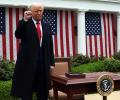
American President Donald Trump has announced imposing reciprocal tariffs on its major trading partners including China that levy higher import duties on goods shipped from the United States. He has already announced a 25 per cent duty on steel and aluminium imports, which will come into effect from March 12.
Refusing to budge from its tough stand on food security issues, India pressed for a fair and balanced outcome of the WTO ministerial meeting in Bali.

The first leg of the Budget session concluded with debates over the India-US trade deal and a former army chief's memoir, and will reassemble on March 9.

Taking Kharg would give the US control over virtually all of Iran's oil exports and thus provide significant leverage, notes Prem Panicker in his must read daily blog on the Gulf War. It would also put American troops within range of Iran's remaining missiles, drones, and artillery on a piece of real estate that is just eight square miles in size, and just 15 miles from the Iranian mainland.
This is the first case involving India and the US at the WTO after both sides decided to withdraw all seven pending cases at the WTO during the Biden administration.

India has completely protected the interests of its agriculture and dairy sector in the India-US trade agreement.
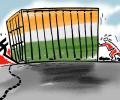
India has revised its proposal to impose retaliatory duties under the WTO (World Trade Organisation) norms against the US over American tariffs on steel and aluminium in view of the further hike in duty by the Trump administration. The US first imposed 25 per cent tariffs on imports of aluminium, steel and derivative articles on March 12.

Commerce secretary Sunil Barthwal is set to attend a two-day meeting from October 23 at the World Trade Organization (WTO) headquarters in Geneva, that would focus on finding solutions and giving the 'necessary political push' for at least some crucial global trade issues. Next week's meeting comes ahead of the WTO's 13th ministerial conference (MC13), scheduled in Abu Dhabi in February 2024. It will see participation of senior government officials from all WTO member nations.

India is unlikely to join the ongoing negotiations for a plurilateral deal on e-commerce at the World Trade Organization (WTO), notwithstanding a change in stance on data localisation and cross-border flow of data. Under the new draft digital personal data protection (DPDP) Bill, put out on Friday for public consultation, the government has proposed free cross-border flow of data with 'friendly' nations, significantly easing its earlier stance on data localisation. India has so far stayed out of a group of 87 countries, including the US, European Union, China, and Japan that are negotiating trade-related aspects on e-commerce since December 2017.

India on Wednesday blocked an attempt by a group of WTO countries led by China to push an investment facilitation pact in the agenda of the ministerial conference here, a move which may ensure that the proposal is unlikely to be part of the final outcome document, an official said. The 13th Ministerial Conference (MC-13) of the World Trade Organisation (WTO) is underway. Commerce and Industry Minister Piyush Goyal, along with his team, is here for the meeting, which started on February 26.
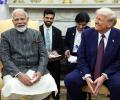
"Their Prime Minister just visited -- he's a great friend -- but I told him, 'You're not treating us right. You charge us 52%, while for years, decades even, we've c'harged you next to nothing. It wasn't until seven years ago, when I took office, that we started pushing back, beginning with China.'"
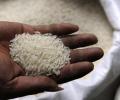
India has defended its decision to ban export of wheat and rice at a WTO meeting even as some member countries have flagged concerns over the country's stand, an official said. At a meeting last week in Geneva, Senegal, the US and the European Union raised questions over this decision, stating it could have adverse implications on global markets. In May, India restricted export of wheat to enhance domestic availability.

Diplomats at WTO have become pessimistic about striking a trade deal.
Here is a list of Q & As to explain these issues and implications of the US move.
India's proposal to impose retaliatory import duty on certain US products in response to American tariffs on steel and aluminium could cast a shadow over ongoing negotiations for a trade agreement between the two countries, think tank GTRI said on Tuesday. The Global Trade Research Initiative (GTRI) said that if the US engages in consultations with India on the matter or withdraws tariffs, a resolution may be reached.
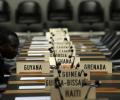
So far, WTO members have jointly respected and honoured the Bali commitments.

The BRICS nations condemned the Pahalgam terror attack, advocated for a zero-tolerance approach to terrorism, and criticized rising tariffs during their summit in Rio de Janeiro. They also addressed global challenges and called for reforms in international institutions.

The meeting, convened by Switzerland, will take place on the sidelines of the annual World Economic Forum meeting.

Protectionist and exclusionary FTAs weaken multilateralism.
Emerging economies led by India and Brazil have informed developed member countries of WTO that they would not accept any dilution of issues concerning food and livelihood security.
Developed nations want the WTO to discuss new issues.

The fate of the ministerial conference was sealed after assistant US trade representative Sharon Bomer Lauritsen said permanent solution to the food stockholding issue was not acceptable to America.

This mission is the 14th human flight for the New Shepard programme and the 34th in its history.
Australian Trade Minister Simon Crean has expressed optimism in sorting and settling challenging differences.

Modi's Made in India dream takes a beating

India has not accepted the demand of the UK for inclusion of a 'data exclusivity' provision in the free trade agreement, announced on May 6, in a bid to protect the interests of the domestic generic drugs industry, an official said. During the negotiations, the UK had asked to include this provision in the trade pact.
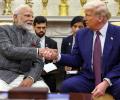
'I certainly hope the two can avoid a trade war and believe they will.' 'I expect some in India will push for retaliatory tariffs if the Trump administration applies significant reciprocal tariffs.'

The US on Tuesday said India must play a leadership role for achieving a global trade-liberalising agreement among 150 WTO members under the Doha Round of negotiations.

The WTO has resumed work at Geneva from September 1 after a month long vacation.
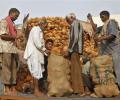
The decision preceded long hours of tense negotiations and last minute hiccups from Argentina and Pakistan

The Cabinet on Thursday approved the stand taken by India at the recently concluded WTO meeting in Bali which endorsed New Delhi's point of view with regard to food security plan and trade facilitation pact.

A day after a breakthrough deal between India and the US on food security related issues, the WTO on Friday said there was a "high probability" of reaching an agreement within two weeks on the stalled Bali package to facilitate easier global trade flows.
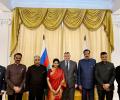
The Kanimozhi Karunanidhi-led delegation is visiting five European nations to garner support for India's campaign against cross-border terrorism.
India finalised a free trade agreement with the UK, its 16th so far as the country aimed at boosting bilateral trade and investments. The other regions and countries with which India has signed such agreements include the four-nation European bloc EFTA, Japan, Korea and Australia.
 © 2026 Rediff.com - Advertise with us - Disclaimer - Privacy Policy - Sitemap - Feedback - About us - Terms of use - Grievances